

Welcome Thrissur District
At the center of Thrissur lies its most iconic landmark: the Vadakkunnathan Temple, an ancient structure dedicated to Lord Shiva that serves as the spiritual and geographical anchor of the city. This temple is a masterpiece of the Kerala style of architecture, characterized by its distinctive sloping tiled roofs, massive gopurams (gateways), and intricate woodwork that depicts scenes from the epics. The city is geographically unique because it is built in a concentric pattern around the Thekkinkadu Maidan, a massive circular open ground that encircles the temple complex. This sixty-five-acre clearing acts as the “lungs” of the city and serves as the primary venue for cultural and religious gatherings. Thrissur is globally famous for the Thrissur Pooram, often called the “Pooram of all Poorams,” which is a breathtaking celebration of Kerala’s heritage. This spectacular festival features a grand procession of thirty caparisoned elephants, standing in a majestic face-off known as the Kudamattom, where colorful parasols are exchanged in rhythmic sequences. Accompanying the visual splendor are traditional percussion ensembles, specifically the Ilanjithara Melam, where hundreds of artists play the chenda and elathalam in perfect synchrony. The festival concludes with a magnificent display of fireworks that illuminates the night sky, drawing millions of visitors from across the globe. Beyond the festivities, the temple’s architecture is noted for its Koothambalam (temple theater), which is one of the best-preserved examples in the state. The murals within the temple walls, particularly the “Vasuki Shayana” and “Nataraja,” are national treasures of artistic excellence. Geographically, the layout of the city—spreading outward from this sacred circle—ensures that the ancient and the modern coexist in a rare urban harmony. This circular urban design is so prominent that the main commercial artery of the city is simply known as the “Swaraj Round.” Historically, the temple was the center of administration, and even today, the city’s life revolves around the rhythms of the temple bells and the vast green expanse of the Maidan. As the “Cultural Capital of Kerala,” Thrissur preserves these traditions through its proximity to the Kerala Kalamandalam and various literary academies. The blend of spiritual sanctity, architectural brilliance, and the sheer energy of its festivals makes Thrissur a living museum of Malayali culture.
Glance Of Thrissur District

Area
3,032 sq km.

Population
460,000

Spoken Language
English

Revenue
₹1.18 trillion
Famous Places
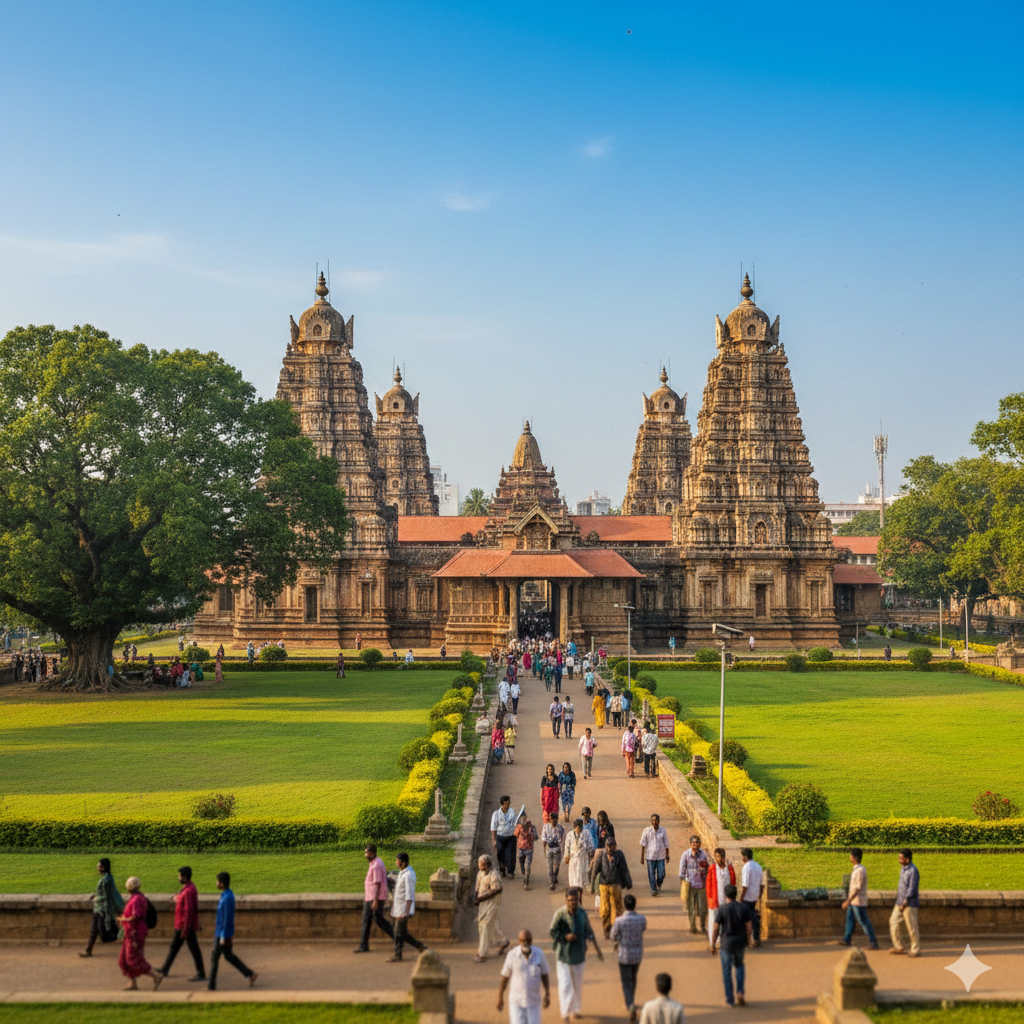
Vadakkunnathan Temple
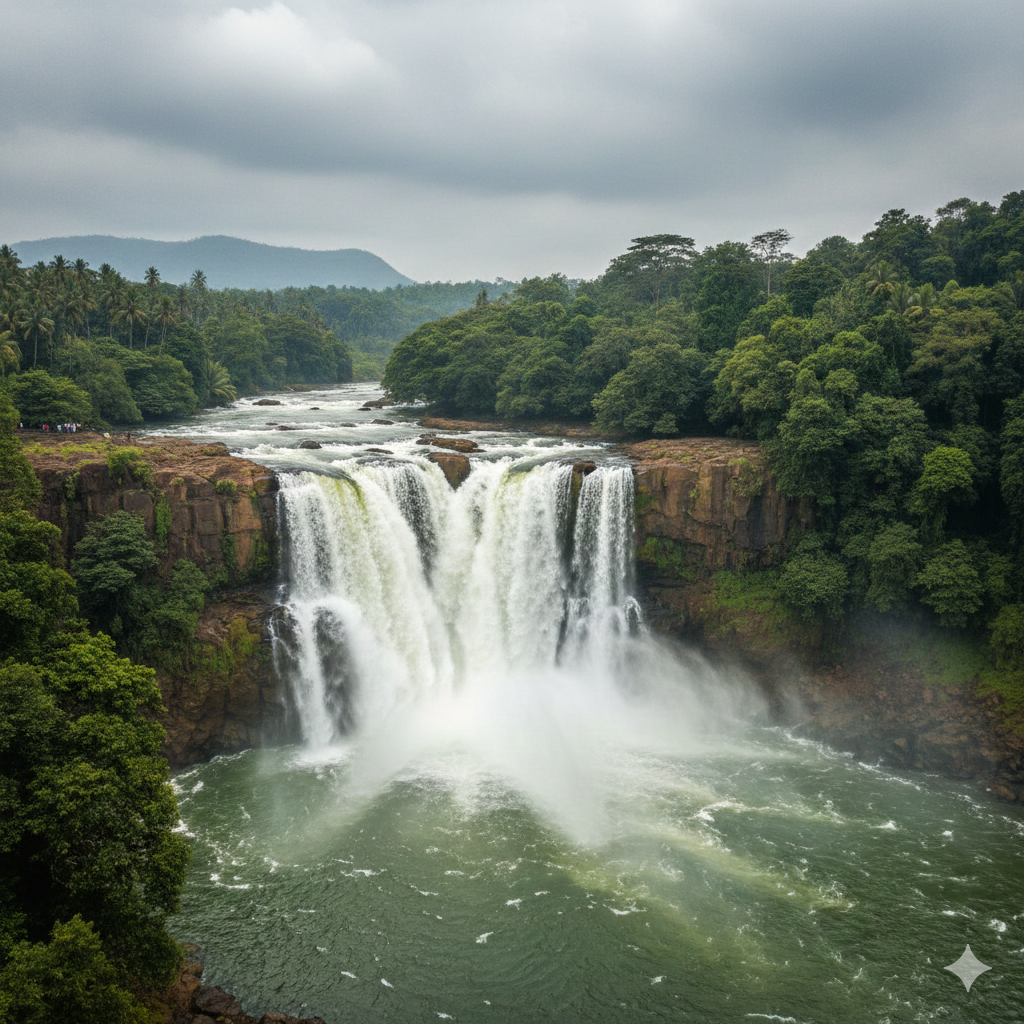
Athirappilly Waterfalls
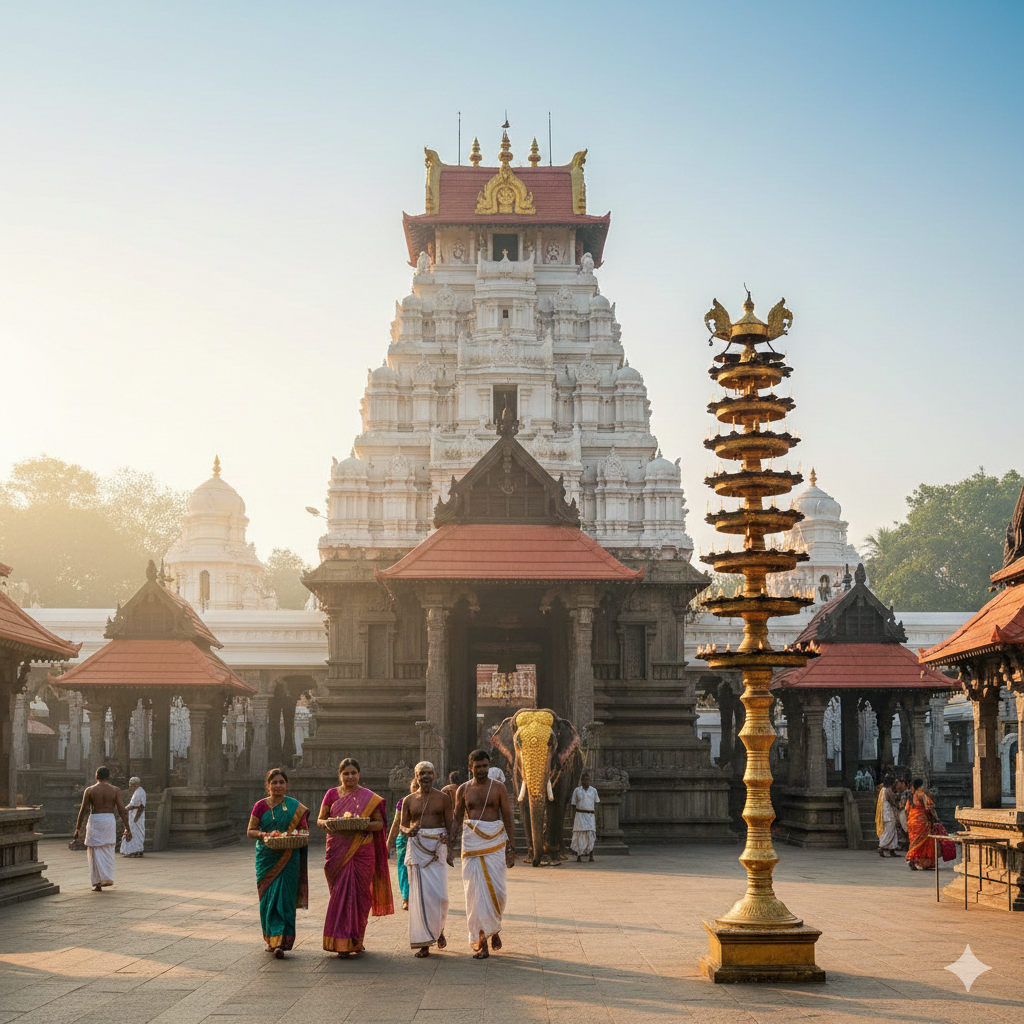
Guruvayur Sri Krishna Temple
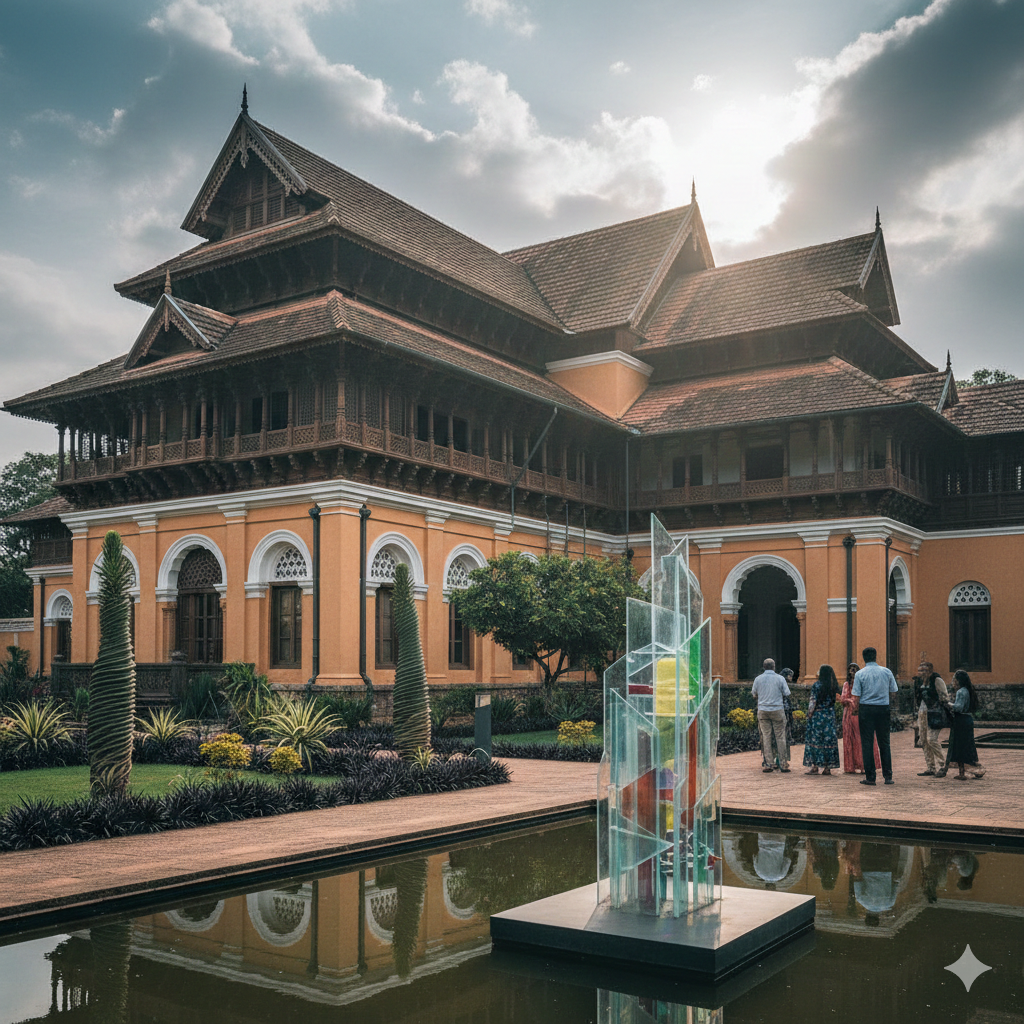
Shakthan Thampuran Palace
Geography
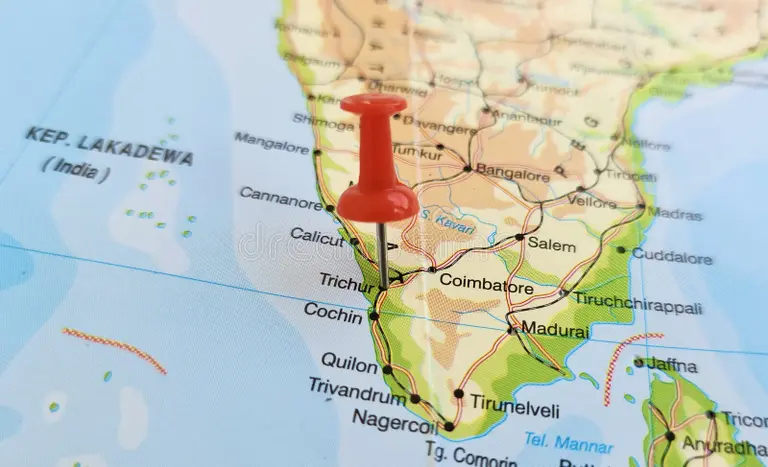
Thrissur is topographically characterized by its central elevated hillock (Thekkinkadu Maidan) which gradually flattens into the vast Kole lowlands. The Vilangan Hills on the outskirts serve as the highest point in the immediate vicinity. Geologically, the city is composed of Archaean gneisses and crystalline schists, with major parts covered by ancient rock formations that allow for natural drainage.The Bureau of Indian Standards places Thrissur in Seismic Zone III, indicating a moderate risk of earthquakes. While the city’s elevated center facilitates drainage, the surrounding low-lying Kole lands are highly susceptible to seasonal flooding and waterlogging, especially during the heavy South-West Monsoon. The 2018 Kerala floods caused severe impact in the district, leading to significant infrastructure damage and loss of life. Unlike Bhubaneswar’s cyclone risk, Thrissur is more vulnerable to extreme precipitation and landslides in its eastern hilly fringes, though it remains alert to coastal hazards along the district’s 54 km shoreline.
You Can Find All Answers Here
Thrissur earned this title because it is the primary hub for Kerala's traditional arts, literature, and religious festivals. It houses the state’s three major cultural academies—the Kerala Sahitya Akademi (Literature), Sangeetha Nataka Akademi (Music and Drama), and Lalithakala Akademi (Fine Arts). Additionally, the world-famous Kerala Kalamandalam, which preserves the classical dance forms of Kathakali and Mohiniyattam, is located just on the outskirts of the city.
The Thrissur Pooram is held annually in the Malayalam month of Medam (usually April or May). While the main Pooram lasts 36 hours, the city begins festivities seven days prior with the flag-hoisting ceremony. For the best experience, aim to be there for the Kudamattom (parasol exchange) in the afternoon and the Vedikkettu (fireworks) in the early hours of the following morning.
The Swaraj Round is the circular road that forms the heart of Thrissur’s urban layout. It encircles the Thekkinkadu Maidan and the Vadakkunnathan Temple. This 2-kilometer circular artery is the city's primary commercial zone, where most of the major gold jewelry showrooms, textile shops, and banks are located. Historically, the entire city was designed to radiate outward from this sacred circle.
By Air: The nearest airport is Cochin International Airport (COK), located about 50–55 km away (approximately a 1.5-hour drive).
By Rail: Thrissur Railway Station (TCR) is a major stop on the Southern Railway network, with direct trains connecting to major cities like Delhi, Mumbai, Bangalore, and Chennai.
By Road: It is situated on National Highway 544, making it easily accessible via KSRTC buses or private cabs from any part of Kerala.
Gold Jewelry: Often called the "Gold Capital of India," it offers some of the best craftsmanship and prices in the country.
Kuthampully Handlooms: Famous for traditional Kerala Kasavu sarees with golden borders.
Spices and Banana Chips: Local markets offer high-quality black pepper, cardamom, and freshly fried coconut oil banana chips.
Handicrafts: Look for Cherpu wooden elephants and traditional brass lamps (Nilavilakku).